
| MEDICAL HUMANISM
The Doctor Is Also Human: What Erich Segal’s Doctors Teaches India’s Medical Profession
The Novel that makes every doctor examine their own life
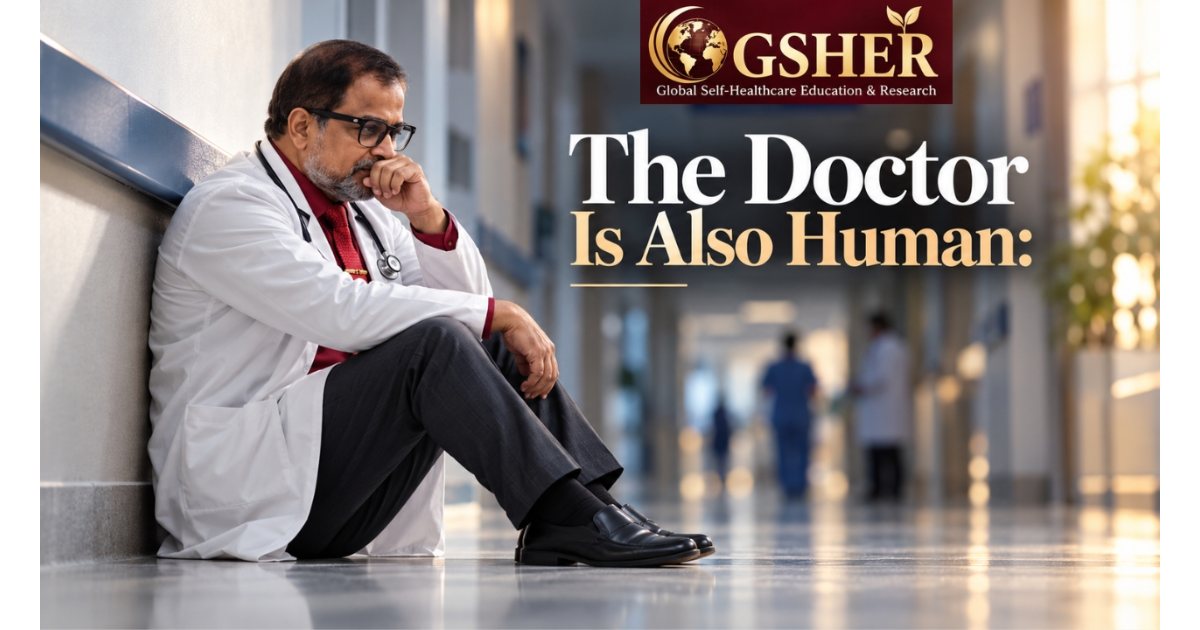
I have spent nearly three decades practicing surgery. I have witnessed extraordinary recoveries, unexpected deaths, professional triumphs, broken families, sleepless nights and the silent suffering of colleagues.
During these years, one question has increasingly occupied my mind: Who takes care of the doctor while the doctor is taking care of everyone else? Reading Doctors by Erich Segal brings this question into sharp focus.
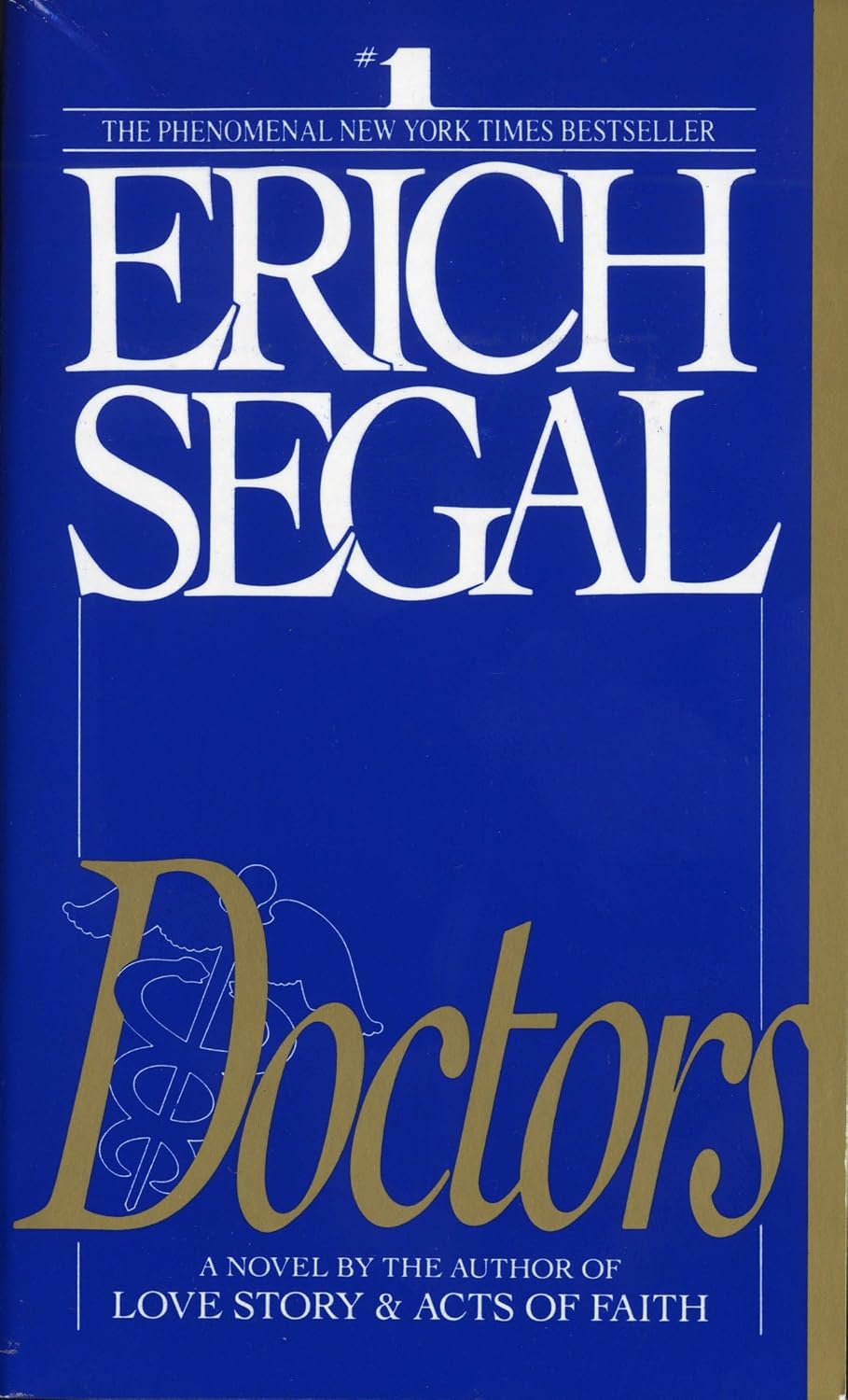
Published in 1988, the novel follows a group of students entering Harvard Medical School in 1958 and traces the consequences of their professional and personal choices. It is a story of ambition, friendship, love, prejudice, suffering, scientific achievement, and moral conflict.
*But beneath these stories lies a more disturbing reality: medical education may teach us how to diagnose illness without adequately teaching us how to live with our own vulnerability.*
Although the novel belongs to another generation and another country, its ethical questions resonate with contemporary Indian medicine.
Barney Livingston: The physician who discovers that doctors need healing
Barney enters medicine carrying the painful memory of a physician's indifference toward his dying father. He resolves to become a different kind of doctor. His journey toward psychiatry reveals something that conventional medical education frequently overlooks: the people expected to heal suffering are themselves capable of profound psychological suffering. Barney recognizes the contradiction between society's almost divine expectations of doctors and their ordinary human limitations. Consider the young Indian resident who has just completed a punishing night duty. He has witnessed death, faced an angry family, skipped meals and returned to work the following morning. Yet everyone expects him to remain calm, accurate, compassionate and emotionally available. Who asks whether he slept? Who asks whether he is frightened? Who asks whether he is coping? We cannot build compassionate healthcare by demanding that its professionals abandon compassion toward themselves.
Lesson: Psychological safety, peer support, adequate recovery and timely mental healthcare must become part of medical professionalism.
A doctor seeking help is not demonstrating weakness. A profession that prevents doctors from seeking help is revealing a failure of its culture.
Laura Castellano: Excellence should never demand the sacrifice of dignity
Laura's journey is deeply influenced by her father's medical aspirations and the discrimination he experienced after leaving Spain. Her own pursuit of excellence brings her into environments where women must struggle for recognition in a male-dominated profession. Her story invites us to reconsider what we mean by merit. In today's India, women have an increasingly important presence across medical education and clinical practice. Nevertheless, many continue to encounter inequitable opportunities, workplace harassment, unequal family responsibilities and barriers to leadership. A talented woman surgeon should not have to demonstrate twice the competence to receive half the recognition. Nor should motherhood, marriage or family responsibilities be treated as evidence of reduced professional commitment.
Lesson: A genuinely excellent medical institution is one in which talent can flourish without humiliation, discrimination or preventable personal sacrifice.
Through GSHER, we must encourage mentorship, respectful professional relationships, and well-being education that includes the distinct challenges faced by women doctors.
Bennett: Technical brilliance cannot replace professional judgment
Bennett's story confronts the relationship between identity, prejudice, exceptional talent, and impulsive decisions. His surgical ability offers the prospect of a distinguished career, yet a consequential personal act threatens his professional future. For surgeons, the lesson is especially significant. We spend years refining our technical skills. We learn anatomy, operative technique, haemostasis, and complication management. But how much structured attention do we devote to anger, impulsivity, emotional regulation, or the effects of exhaustion on judgment? An accomplished surgeon may still be vulnerable to poor decisions outside the operating theater. A celebrated operator may also be a difficult colleague. And a technically perfect operation does not automatically make someone an excellent physician.
Lesson: Surgical excellence requires not only technical proficiency but also ethical maturity, emotional regulation, humility and teamwork.
The scalpel must be guided by judgment, not ego.
Seth: When preserving biological life becomes an ethical dilemma
Seth enters medicine profoundly affected by the devastating illness and disability experienced within his family. His sensitivity toward suffering eventually brings him face to face with one of medicine's most difficult questions: what does it truly mean to preserve life? Modern technology allows us to sustain physiological functions in circumstances that previous generations could not imagine. But technological capability does not eliminate ethical responsibility. Indian doctors encounter these questions in intensive care units, oncology wards, emergency departments, and end-of-life conversations. Families may ask for every possible intervention, even when the likelihood of meaningful recovery is extremely limited. Doctors may struggle between therapeutic persistence and potentially burdensome treatment.
Lesson: Good medicine requires honest prognostic communication, informed decision-making, symptom relief and respect for patient dignity within ethical and legal boundaries.
A physician's responsibility is not simply to prolong biological processes. It is to care for a person.
Maury Eastman and Palmer Talbot: Two reminders about identity and prestige
The supporting characters also illuminate pressures within medical culture. Maury, who identifies himself as a writer, reminds us that students enter medicine with identities beyond their professional ambitions. Palmer's privileged social background invites reflection on prestige, status and the hierarchies surrounding medical institutions. These characters offer an opportunity to examine two familiar problems. The first is the gradual disappearance of the person behind the professional title. The young doctor who once loved poetry, music, cricket, or literature may eventually define every waking hour through examinations, patients, publications, and promotions. The second is the tendency to confuse institutional prestige with moral or clinical excellence. A prestigious degree may open doors. It cannot guarantee compassion. A large hospital may possess impressive infrastructure. It cannot automatically provide humane care.
Lesson: Doctors must preserve a life beyond medicine, while medical institutions must evaluate professional excellence through integrity, competence, patient outcomes and respect, not status alone.
What has changed in Indian medicine? When I entered medicine, we were taught to work harder, operate more, see more patients, and build a reputation. Those expectations were often presented as the natural pathway to success. There is value in disciplined work and professional dedication. But dedication becomes dangerous when it is confused with limitless availability. Today, many doctors work within systems driven by patient volumes, financial targets, administrative demands, documentation burdens and growing expectations. Sophisticated technology has improved what medicine can accomplish. Yet the relationship between doctor and patient can become increasingly transactional. We must acknowledge that healthcare institutions need sound financial management. But financial sustainability and commercialization without ethical restraint are not the same thing. The patient's welfare must remain the purpose of healthcare, not merely a mechanism for generating revenue. And the doctor must never become a replaceable production unit. This is why I repeatedly say: Healthcare is not merely an industry. Hospitals are not hotels. Sickness is not a commodity. CelluReva™: Bringing self-healthcare back into the physician's life The characters of Doctors helped me reflect on a central paradox. We teach doctors to understand disease mechanisms, yet often neglect the daily biological conditions under which doctors themselves must function. We study cardiovascular physiology while neglecting our own physical activity. We understand sleep physiology while celebrating sleeplessness. We explain stress responses while treating relentless stress as a badge of dedication. Through GSHER, the CelluReva™ Protocol proposes a practical framework for structured self-healthcare.
The CelluReva™ Healer's Framework
RESET Recognize stress, regulate attention and interrupt harmful automatic reactions. REVIVE Protect sleep, nourishment, movement and opportunities for physiological recovery. REPROGRAM Examine perfectionism, unrealistic expectations, professional identity and habitual responses. RESTORE Rebuild relationships, meaning, supportive communities and sustainable professional routines. The framework supports established occupational-health and clinical care practices. It is not a validated standalone treatment for burnout or psychiatric illness. The essential principle is simple: A doctor's capacity to care for others depends partly on the conditions in which that doctor lives and works. Individual self-care cannot compensate for unsafe staffing, excessive duty hours, or exploitative institutional policies. Therefore, CelluReva™ must be accompanied by organizational reform, not used to place responsibility for burnout entirely on individual doctors.
Five changes I would like to see in Indian medical education
Imagine a medical college where students receive structured education in self-healthcare alongside anatomy, physiology and pathology.
- Where residents are encouraged to report fatigue without humiliation.
- Where senior doctors discuss mistakes as opportunities for learning rather than occasions for personal destruction.
- Where young surgeons learn that operating more is not necessarily synonymous with living better.
- And where every medical student graduates with an understanding that maintaining personal health is compatible with professional dedication.
I would propose five institutional commitments:
1. Self-healthcare education: Teach sleep, exercise, nutrition, emotional regulation and professional self-awareness. 2. Confidential mental-health support: Make timely, accessible and non-punitive psychological care available. 3. Humane training conditions: Address unsafe workloads, harassment, fatigue and inadequate rest. 4. Ethical mentorship: Reward patient-centered practice, respectful teaching and professional integrity. 5. A broader definition of success: Evaluate doctors not only by qualifications, publications or procedural volumes, but also by patient safety, teamwork, professional conduct and sustainable practice. These reforms are consistent with the wider educational mission of Global Self-Healthcare Education & Research.
A message to the young doctor
Dear young colleague, You will encounter patients you cannot save. You will make decisions under uncertainty. You may experience criticism despite doing your best. You may discover that the profession you once idealized contains politics, commercial pressures, unfairness and disappointment. Do not allow these experiences to destroy the compassion that brought you into medicine. Learn continuously. Develop excellent clinical skills. Respect science. Follow evidence. But do not sacrifice sleep, health, relationships and integrity in an endless race to prove that you are successful. Your worth is not measured by the number of operations you perform, the size of your hospital, the letters after your name or the balance in your bank account. *Your professional achievement matters. So does the life you live while achieving it.* From the wounded healer to the conscious healer
Perhaps the greatest lesson of Erich Segal's Doctors is that medical education does not automatically produce a humane physician.
It produces knowledge, skills and credentials. Humanity must be cultivated, protected and repeatedly rediscovered. At GSHER, we envision a generation of doctors who are scientifically competent, emotionally aware, ethically grounded and capable of caring for themselves as well as their patients.
Not doctors who abandon ambition. Doctors who redefine it.
Not doctors who withdraw from service. Doctors who learn to serve sustainably.
Not doctors who reject modern medicine Doctors who restore the human relationship at its centre.
I began my career wanting to become a successful surgeon. After decades in the operating theatre, I have come to appreciate a different measure of success.
The greatest achievement of a doctor is not merely to add years to the lives of patients, but to preserve the humanity that makes those years worth living—without losing one's own life in the process.
Medicine must remain scientific. Medicine must remain ethical. Above all, medicine must remain human. Because the doctor is also human. About the author
#DoctorsBeyondPrescription #CelluReva #GSHER #DoctorWellbeing #MedicalHumanism #SelfHealthcare #MedicalEthics #TheDoctorIsAlsoHuman Invitation GSHER invites medical colleges, hospitals, resident-doctor associations and professional bodies to explore Doctors Beyond Prescription, a proposed educational initiative to strengthen professional wellbeing, ethical leadership and compassionate healthcare. Learn more at globalselfhealthcare.org.
Reader conversation
Comments & replies
Share a thoughtful response. Every comment is reviewed before it is published.
No published comments yet. Start the conversation.